ADVERTISEMENT
 (No Ratings Yet)
 Loading...
Fullscreen
ADVERTISEMENT






 (No Ratings Yet)Loading...
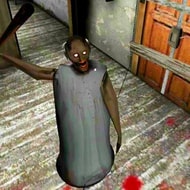
You wake up in a cold, unfamiliar bedroom with no memory of how you got there, and the first thing you notice is the padlock on the door. Somewhere below, footsteps shuffle across old floorboards, slow and deliberate, and you already understand you are not alone in this house. That is the opening moment of Granny: Chapter One, and it never lets go of that feeling of being watched. Every creak of wood, every dropped item, every careless dash across an open hallway risks drawing Granny’s attention, and once she hears you, the whole house turns against you at once.
| Genre | Horror |
| Platform-style | First-person survival escape |
| Core Mechanic | Stealth, item puzzles, sound-based AI pursuit |
Granny: Chapter One drops you into a sprawling, decaying house with one goal: get out before Granny catches you. You’re given roughly five in-game days, though most attempts end far sooner, either in a sprint through the front gate or a sudden grab from the dark. There’s no map, no waypoint arrows, no hint system. You learn the house the way every player does, by dying in it a few times first.
The setting itself does a lot of the storytelling. Peeling wallpaper, boarded windows, and decades-old furniture give the impression of a home time forgot, except for its one resident. The layout splits across a basement, a ground floor, and an upstairs level, connected by narrow halls and locked doors that force constant backtracking. Wooden planks over a passage in the basement and a stack of chests blocking an upstairs hallway are obstacles you’ll eventually clear once you’ve found the right tool.
What makes the map genuinely tense is that nowhere feels permanently safe. Granny patrols on a loop that reacts to noise, so a room that was empty moments ago can have her standing in the doorway the next time you peek out. Long-time players talk about the backyard as one of the calmer pockets of the house, since Granny rarely wanders out there unprompted, but that safety evaporates the instant you make a racket near it.
The basement rewards early investment. A breaker box with wires needs to be dealt with to shut off the front door alarm, and a padlocked side room hides extra tools if you can crack its code. Rushing that exploration under pressure, with Granny’s footsteps somewhere above you, is where a lot of first attempts fall apart.
Granny doesn’t see you so much as she listens for you. Her AI reacts to sound rather than sight in most situations, which flips the usual stealth-horror formula: you worry less about a cone of vision and more about every footstep, every dropped object, every slammed door. Sprinting is fast but loud, walking is slow but quiet, and crouching splits the difference while letting you slip beneath a bed or into a closet without much noise.
The genuinely stressful part is that Granny doesn’t just wander toward noise once and give up. She investigates thoroughly, checking nearby rooms and lingering near a sound long enough that holding your breath in a closet starts to feel like a real strategy rather than a joke. Crawl spaces under both upstairs beds work the same way, letting you vanish from a room as long as you stay still while she checks it.
Here’s a short list of habits that keep a run alive longer than most first attempts manage:
Granny doesn’t only rely on her own hearing. She scatters bear traps around chokepoints and closet entrances, and stepping on one is loud enough to summon her from across the house even if she wasn’t close. You can pluck a trap off your leg or drop a disposable item onto it to disarm it, but either way it costs precious seconds you may not have.
Weapons exist in Granny: Chapter One, but they’re not about winning fights, since there’s no fight to win against Granny directly. A crossbow and a shotgun can each stun her for a short window if you land a hit, buying time to slip past or dash for a door she’d otherwise guard. Both are limited enough that hoarding them for a real emergency, rather than firing the moment she gets close, tends to separate successful runs from short ones.
The guillotine out in the backyard is one of the house’s more memorable puzzle pieces. Cutting the right object open there reveals a key or tool hidden inside, but triggering the device makes noise, sometimes enough to summon Granny from wherever she was patrolling. The trick regulars use is baiting that noise on purpose, then slipping into the living room through the yard door while she investigates outside.
There isn’t one single escape from the house in Granny: Chapter One. The most direct route runs through the front door, but reaching it usually means solving several smaller puzzles first, since it starts locked and alarmed. A second route runs through the garage, assuming you can piece together what’s needed to get a vehicle moving. A quieter, riskier option cuts through hidden tunnels connecting the basement to rooms Granny almost never checks.
Picking a route early changes how you spend your five days. Some players commit hard to the front door plan from the first night. Others treat the garage as a backup once the front door proves too heavily guarded that run. Newer players bounce between all three without a real plan, usually the fastest way to run out of days.
Tucked away in the attic is one of the house’s stranger secrets: a crib belonging to Slendrina, a second presence most new players never notice until she’s suddenly there. Finding a teddy bear elsewhere and placing it in that crib is a small, optional detour, but it’s the kind of thing longtime fans bring up when the topic of Granny: Chapter One’s hidden details comes up. It’s genuinely unsettling the first time it happens, and most players only learn about it after getting caught off guard once.
This is also where the difficulty gets a little divisive. Some players love that Slendrina adds a second layer of tension on top of Granny’s patrols; others find dealing with two threats at once tips an already unforgiving game into frustrating territory. Both opinions show up constantly in community talk, and neither side is really wrong.
Granny: Chapter One earns its reputation through that tension between planning and panic, whether you’re timing a run past the guillotine, listening for footsteps from inside a closet, or finally hearing the front gate creak open behind you.
(0 votes, average: 0.00 out of 5, rated) (0 votes, average: 0.00 out of 5, rated) 
 (1 votes, average: 5.00 out of 5, rated) (0 votes, average: 0.00 out of 5, rated)
  (1 votes, average: 5.00 out of 5, rated)
  (1 votes, average: 5.00 out of 5, rated)
  (1 votes, average: 3.00 out of 5, rated)
 There are no reviews yet. Be the first one to write one.